Redefining Toughness: How Ancient Philosophy & Scripture Shape the Male Soul ⚓

 Apple Podcasts
 Spotify
 Castro
 RSS Feed
 Is our modern definition of "toughness" actually biblical, or is it just a shadow of the ancient world? 🏛️💭
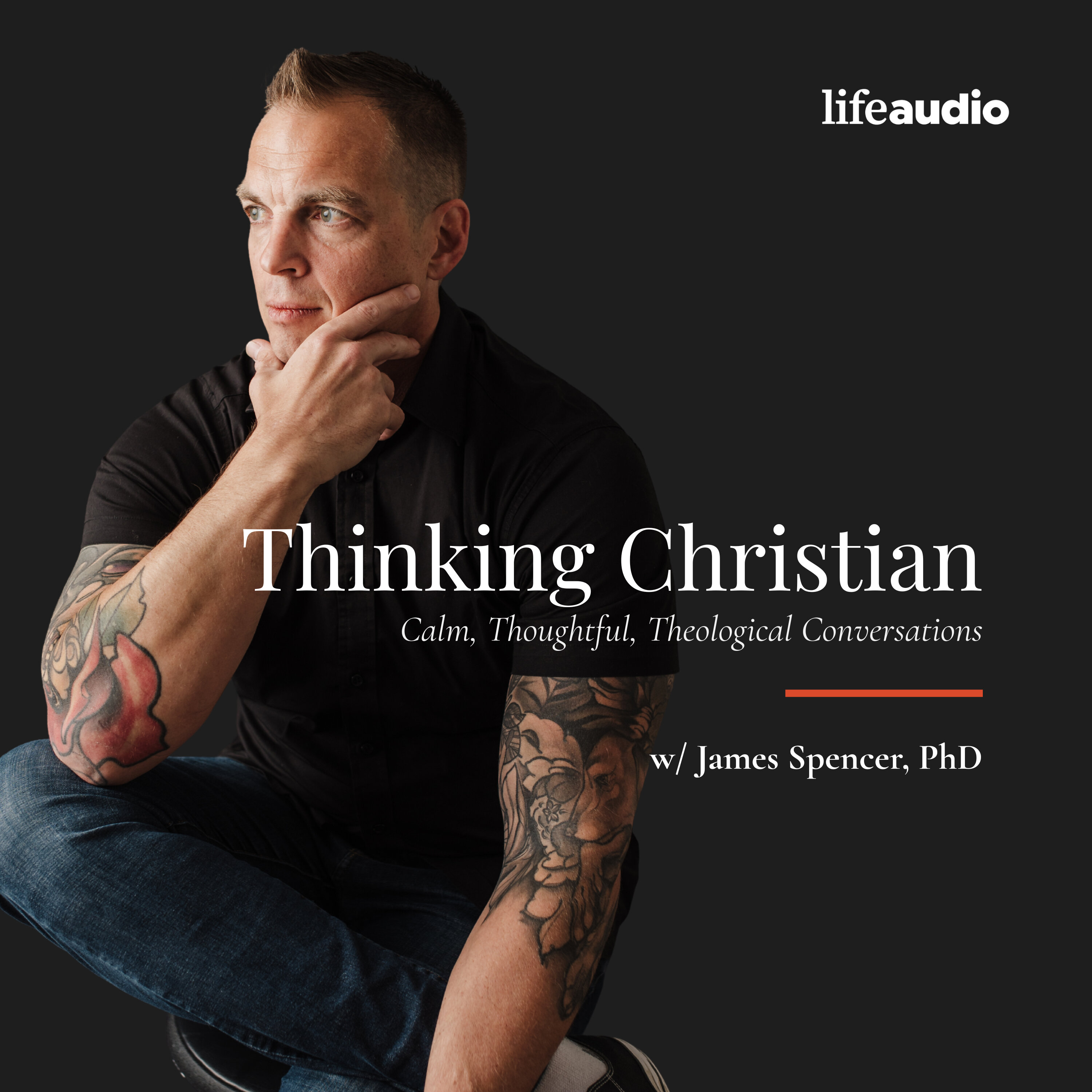
In this intellectually stimulating episode of Thinking Christian, Dr. James Spencer and Dr. Ashish Varma explore the intersection of virtue ethics and theology. They look back at how the ancient world understood masculinity and femininity in relation to the virtues and ask: How did the early church transform these ideas into a call for all disciples?
In this episode, we discuss:
-
Virtue Epistemology: Moving beyond "what we know" to "who we are" as a prerequisite for truth. 🧠
-
The Classical Map of Virtue: How concepts like courage, fortitude, and restraint were gendered in the ancient world.
-
Redefining Toughness: Shifting from a "claspable" understanding of physical toughness to the spiritual grit of the person of Jesus. ⚓
-
The Universal Call: Why virtues like courage and restraint are not gender-exclusive but are intended for everyone conformed to the image of Christ.
-
Character over Culture: Navigating the current cultural tide by rooting our identity in the character of God rather than social stereotypes.
Join us as we bridge the gap between ancient philosophy and modern discipleship to find a more robust way to live as men and women of faith. ✨🙌
Get early access and a bonus with a Patreon membership.
Subscribe to our YouTube channel
To read James's article on this topic, check out his author page on Christianity.com.
📢 Stay Connected & Keep Growing!
If you enjoyed this episode, be sure to subscribe to Thinking Christian, so you never miss an insightful conversation!
#ThinkingChristian #VirtueEthics #Discipleship #Theology #AncientWisdom #ChristianLiving #Masculinity #FaithAndIntellect #Philosophy
Discover more Christian podcasts at lifeaudio.com and inquire about advertising opportunities at lifeaudio.com/contact-us.
Speaker 1: The world is becoming increasingly proficient at telling stories that deny God. As such, we need Thinking Christian to become as natural as breathing. Welcome to the Thinking Christian podcast. I'm doctor James Spencer, and through calm, thoughtful theological discussions, Thinking Christian highlights the ways God is working in the world and questions the underlying social, cultural, and political assumptions that hinder Christians from becoming more like Christ. Now onto today's episode of Thinking Christian. Hey, everyone, welcome to this episode of Thinking Christian on Doctor James Spencer. I'm joined by doctor Rashish Varma, and we're continuing our conversation about biblical masculinity and really about what it means to become a male disciple of Jesus. And so today we're going to be discussing whether or not or how masculinity and femininity were thought of in relation to the virtues in the ancient world. And so this is very much a discussion that I'm interested in, but on an expert on and so it's great to have Ashi's here to talk about it. So you just wanting to give a little bit of your background on your intersection with the virtues and theology, just so people have a context for what this is and where you're coming from with it.
00:01:11
Speaker 2: Yeah, I have a lot to say about virtues. It's been a it's been a central focus of mind for well over a decade, going back to my master's work. When I first encountered it, it was specifically in the context of conversations on epistemology, which is a fancy word that means how do we how do we know that we know? The late Jay Wood was a major player in this, and he was a professor of mine of philosophy. One of the key tenants is with virtue epistemology is perhaps we're looking at things wrong in the modern age when we when we keep asking the questions of knowledge instead of it being a set of criteria of all these things you need to fit together to say this counts as knowledge right. So quick example would be I did this once in class. I said to a student. Let's say so and So's dad works on the railroad and he comes home after a long day of work, and he's tired. It was one hundred degree day, and she knows after work he already likes to unwind. He has the seat he likes to sit in and he relaxes. Leave him alone for an hour while he recharges. On this particular day, it's so hot that she thinks, yes, I'm going to leave him alone, but I need to leave him alone actively. I'm gonna go in there and give him some lemonade help him recharge. She looks out into the family room. She sees a head poking up over the chair that he likes to sit in that time of the day, and so she thinks, okay, he's home, and she goes in there and it turns out it's her uncle that's sitting in that chair. And then she looks across the room and there's her dad. So her dad was in the room, right, And the question of epistemology is did she know that her dad was in the room. And the answer is, for most epistemologists know because there's a qualification that entails more than just being right about something right. You certainly can't know something that you're wrong about, but you don't Just being right doesn't mean that you know right. She was right for the wrong reason. So what are those reasons? Is the question of epistemology. Now the added dynamic here, when I did this with one of my students, was she was just dumbfounded, and I was a little confused. I thought, this is a lot of interesting stuff, but dumbfounded is a little that much. She said, how did you know? My dad works on the railroad? And I just chuck on and said, are you serious? Yeah, yeah, Well it was a live example within the example, right. I didn't know. I happened to be right right, just like her in that fictive story. I also happened to be right, but I did know, so it served as a double example. Right. But what Jay would in company Linda Zagzebsky is another major player in this conversation, was maybe it's more than just trying to figure out what those qualifications are for being right. There's also a character element, and that's the virtue piece that they were trying to draw into this. And that was my first introduction to it, because at first it seems odd I have to have strong character to be counted as knowing now, we won't get into the depths of that conversation other than to say, became increasingly compelling to me to think character is a dynamic here, right, Posturing yourself as a person who cares well and rightly about knowing well is an important part. And in fact, knowing well you don't just know because you have an innate curiosity, but you have a desire to know things on such an intricate level that the character of getting people right matters. Right. I'm not going to just believe someone comes to me with a story. I don't just believe that story because they told me, or because I like the person, or because what they said just sounds outlandish enough that it must believe it. Right. What are the characteristics that go into wanting to understand a situation well enough? Right? So that got me into other conversations that led me to someone named Dan Treyer, a late theologian a Wheaton College, as well as Kevin Van Hooser, who ended up being my doctoral supervisor. Where I wanted to get into this more and more, and that led into my dissertation, and for me, the question was historically Christians do care about virtue right, which is virtue based ethics, but they tended to be relegated to theological circles, especially Catholic circles that Protestants tended to get nervous about. In fact, they'd say that's a that's a Catholic issue. We don't get into that. In fact, most Protestants in the modern age tended to be drawn towards something called deontology on one side, or utilitarianism on the other. The ontology is a fantasy word that just basically says duty based ethics. Right, you have a you have a larger sense of what's right, is right, is always right, and that's what you do. Yeah, And that tends to be the most common, especially among evangelicals. Utilitarian ethics tends to be consequentialist ethics, which is just a way of saying, we consider what the result will be, and based upon the result, we make the right decision. Now, a basic example, you're you're hiding a group of Jewish people in the middle of the Holocaust. These Nazi soldiers come to your door and they ask are you hiding any Jewish people in your house? For the utilitarian, the consequential based out like, the answer is really easy, right. The consequence of me telling the truth is they're going to take these Jewish people away and probably kill them, if not kill them, put them in concentration camps. So I lie, and that lie is not wrong because the consequence is what matters. So there's an ethical dynamic tied into the consequence. Yes, for the de ontologist, where it's what's right is right, is always right? Right, these universal imperatives categorical imperatives. Kant would say, it's a little bit more complicated. I don't want to lie. Lying is wrong, yeah, But if I don't lie, murder is going to happen. Right, So Kant says, you find ways to truthfully be deceitful because you can't lie. Yeah, So I think, well, the question they asked my daughter, one of my daughters is really good at this one. She picks on my words all the time. If she wanted to be, she'd be aontologists and training. But it's I think about the words. Are you hiding a Jewish person in your house? Well, it just so happens. I have a trapdoor in my kitchen that leads under my house. So no, I don't have Jewish people in my house. And I think all this in my head. Obviously you don't say that out loud, and so now I can, with a clean conscience tell the truth. No, I do not have Jewish people in my house. Everyone wins. I told the truth. Technically, the people that I'm hiding are safe, and as long as the soldiers believe me, they go away.
00:08:34
Speaker 3: Right.
00:08:37
Speaker 2: The virtuoist and this is the more common historical Christian understanding, but not a terribly prominent Protestant theory over the last several centuries, says things are more complicated. Right. It's one thing to speak of the Nazi situation and think of consequences. It's another thing when you don't know what the consequence will be. You don't know how things will turn out. So let's take that Nazi example and let's move to the Book of Joshua. So Joshua's sunspies into Jericho to scope the place out, and now you've got Rahab. And Rehab is in the same situation. She's hiding a couple of these spies, and the soldiers come to her door. We're looking for these spies? Are you hiding them? And Rehab says no. Now she doesn't have the deontological situation in hand where she can just say, well, I technically didn't like the Rahab lies, right. But the interesting thing about it is that she's commended as faithful and she's the one who survives the destruction of Jericho right, her and her family. So things seem a little bit more complicated. Now from the consequentialist side, how could she possibly know the consequence would be better for her to tell a lie. As far as she knows, her protecting two people in the face of these soldiers is stealing her own death warrant. Right, as far as she's concerned, perhaps she's going to be a martyr for this. She believes in the God of Israel, she trusts that these people here for the right thing, but it's not going to turn out well for her, So she sort of fails. Both dynamics and the virtuous would say, well, what matters here is character. In the case of rehab, the reason she's saved is the character of faith, the character of faithfulness, the character ultimately of willing to place her life on the line to stand up for what is right, even if the consequence is the loss of her life and the life of those she's standing.
00:10:44
Speaker 3: Up for right.
00:10:46
Speaker 2: And so this virtuous mentality is looking that way, and that's to me, that was the most compelling ethical theory and remains the most compelling ethical theory. Now, as we'll talk a little bit about there's a sordid tale for virtue. I don't want to overlook that. But my question was, as I got into my doctoral work, what does it mean to affirm the virtuous as a Protestant who stands in a line of people who've generally been too scared to think of virtue because it's quote that Catholic way of thinking. So I wanted to try to make it, make it theologically palatable for Protestants in general. So that's kind of the background of how I got into it, but also the issues that were at play that made it more compelling to me because as I look at the works of Jesus, the words of Jesus, the New Testament, Corpus in general, really the Old Testament in general, character seems to be what's on full display, right, whether it be situations like Rahab or situations like where God gives you this sacrificial system in the Old Testament and then he says multiple times or either way right right, all the way to the end of the Old Testament. With Malachi, it's not really what I'm after after heart, right, It's about the formation of these patterns of mercy, fat patterns of justice. Right. So then the next question that comes into virtue that I think especially makes it significant to biblical theological ethics is that virtue cares about character. But the formation of character is not just about a one time does it all?
00:12:35
Speaker 3: Right?
00:12:35
Speaker 2: It's about the patterns or a word that you and I both like in various context habits.
00:12:42
Speaker 3: Yeah.
00:12:43
Speaker 2: Right, So if we think about driving a car, when we first drove a car, at least for me, it was a terrifying thing. I was excited right up until I started driving it. Sure, But of course decades later we don't think about it. We often will end up at our destination and realize we've been zoned out for the last twenty minutes. Right, well, how does that happen? We've built habits, hopefully of good driving, that allow us to not have to agonize over every moment of driving or every detail of driving, so that it becomes like second nature and virtues wanting to say that ultimately these decisions are not things that we can spend every moment agonizing over, these ethical decisions. But for someone like rehab, it's about building that ethical character over time or the habits, so that when the moment arises, we habitually act in a way that we ought to act in a way that lifts up other people around us, whether or not it means a consequence that's thriving for all of us. Right, So, in the case of Rahab again, or the person hiding, the Jewish soldier, or the Jewish refugees, it may turn out really bad, oddly on paper for all of them. They all die, but they did the right thing ostensibly out of a sense of character that they'd formed through right decisions over time.
00:14:11
Speaker 1: Go ahead, No, I mean, I find it really interesting. It feels like what it's moving toward is the deontological position, and I don't know that that's correct. So there's a part of me that so when we think about the virtue aspect of this and the building of character across time, that what we're always going to end up with is some approximation of how we should act within a given moment, because that moment is so strange and odd. And I still like the analogy of a baby mobile above a baby's crib, and you touch one side of it, and the whole thing moves and not necessarily in ways that that you wantderstand how it's going to move, right.
00:15:03
Speaker 3: And so with the virtue ethics.
00:15:05
Speaker 1: As you're developing these patterns of integrity across time, patterns of virtue across time, is that similarly what's happening like in any given moment, you are trying to embody faithfulness, You're trying to be you know, embody these virtues of charity, mercy, compassion, what have you. But in any given situation, you may find yourself unsure how to go about doing that because the consequences seem so dire, and the the the right thing seems like it's going to end up with the wrong result.
00:15:38
Speaker 3: Does that make sense? And so you're as you're on this.
00:15:41
Speaker 1: Road, you're you're developing a consistent pattern, but not a concrete, completely rigid understanding of what to do in any given situation.
00:15:59
Speaker 2: That's right, That's right.
00:16:00
Speaker 3: Okay.
00:16:01
Speaker 2: So if we think about someone like the nineteenth century Danish philosopher Kirkgard, he spent a lot of time really dwelling upon the sacrifice or the potential or the near sacrifice of Isaac Yes at the hands of Abraham, and for him he wasn't a virtuous to per se. He came up with a whole another way of thinking that I don't entirely buy, but I think his scenario is instructive.
00:16:32
Speaker 3: For him.
00:16:33
Speaker 2: He was critiquing, especially a day ontological understanding of these sort of static ethical codes that we just memorize, right, the way that we tend to think of, I would say, wrongly the Ten commandments, thou shalt not kill? Right. And yet here's Abraham, before those codes obviously are given to him. He's told, Hey, take Isaac up to that mountain and offer him as a sacrifice.
00:16:59
Speaker 3: Right now.
00:17:00
Speaker 2: You and I have discussed when we were working through Genesis, a series that I don't think will be out yet, but check it out, YEA, that there are other things that play there for Abraham than just a simple, out of nowhere, blank slate command, go kill your son Isaac. However, he does have this moment that Kirkerguard wants to say, where it's a there's something of an assault upon his ethical code if he's thinking, don't kill because now the God who he's supposed to obey, who is trusting, who has led him into this new land, who's made these promises to him, wants him to kill not just anyone but his own son, and not just any son, but the only son that's supposed to be the avenue to the fulfillment of the promises made to him. Right, So, for Kirkerguard, the answer is despair. You enter this moment where your rigid categories of ethics will ultimately lead you, in complicated situations to despair. Now, the question is what do you do with that despair? You wallow in that despair, in which case you're functionally a broken person, and maybe you chuck everything and you say, I reject faith in Yahweh the covenant God, or I reject faith in Jesus because it's asked me now to do something I can't do. Cure of God's answer is you graduate finally in that ultimate despair into what's the true ethical and the true ethicals obedience to God. I would break from him there and say that the obedience has too much in the background, right of how do you know this is the place to show obedience or how do you know that the obedience will be paid forward in the case of Abraham in the right way? Well, Kiderguard would say, well, you don't know. You just do it because God said to do it. The virtuous way would say, there's a sense of character at play where you're you're trusting God. So for the for the theological virtue tradition, faith or trusting God is itself an ethical reality. Your trusting God is so formed in you because you trust God every day in the little things. Give us this day our daily bread. Yeah, deliver me, Deliver me from evil? Right, forgive me my debts. If you're doing this in the daily life, then when this cataclysmic event that could cause you despair comes upon you, you recognize there's more at play than meets the eye. And so perhaps as as you've spoken about it before, when Abraham encounters this seemingly awful command from God, he's recognizing there has to be more than meets the eye, right, because God has already given me this son in my age and in my wife's old age, in a way that God didn't have to do, but God did because God promised it. And I've already learned in the little things to trust God. So now the form of that, the habit of mine, the habit of disposition to trust, is in place. And so the virtuous action is to say, I don't actually perhaps believe that God intends to have me kill Isaac, or that God will allow Isaac to stay dead. I believe God, who has already shown me these steps, will do something about it. Right, So I think of I mentioned Dan Tryer once he told me sometimes God perhaps puts things in front of you to teach us to say no. You shouldn't assume every opportunity is a real opportunity that you should say yes to. And I take that to heart, right, But how do you know those moments? Well, you don't know it in any sort of straightforward way. But if you have the habit of disposition, and you're faithfully working forward to build those habits of trust, perhaps you know in a certain moment there is a path that I could take, and take that path seems like it could get me the right result that I want. But I think that path, based upon this habit of faith that I've been forming, based on the habit of charity of justice that I've been forming, seems like the wrong path. It requires me to compromise in the wrong ways. So perhaps it's better to quote something else we've talked about, lose in the right way, and that's actually a win. Right. Yeah, So there would be the disposition, the character the virtuous want to talk about.
00:21:46
Speaker 1: So let me give just one more example to make sure I think, because I think I understand this, and I'm kind of reading it through Pierre Bordio's habitists, Like it seems like it has a lot of connection there where you're kind of learning how to go about operating. Pierre Bordeo's has a little bit more impetus, I think on the reward structure, like the capital within a field, but I also don't think that's inconsequential to the virtue side of things.
00:22:12
Speaker 3: So but here's my here's my thought.
00:22:16
Speaker 1: Like I got a job offer to travel around and meet with CEOs, Christian CEOs of different companies, and I would sort of disciple, you know, ten or fifteen of these CEOs is the job, right, But it required an awful lot of travel. This is a couple of years ago. My daughters were fifteen at the time, my son would have been eighteen, just going off to college. You know, we were in the midst of adopting our youngest.
00:22:48
Speaker 3: And I'm just sitting there.
00:22:49
Speaker 1: I'm like, this is a really cool job, like discipling these guys, and you know, like I had the right disposition for it. You know, I'd been in executive leadership positions. I'm not not overly confident, right, but I'm not I'm also not going to be a pushover, right, So there's not gonna be this ego trip between me and the CEOs, right. And and I was like, this would be a really cool job, right, really interesting, really compelling job, great opportunity that I ended up saying no to because in part I was like, I have to travel, I'd have to be gone most of the time, and that's not gonna work. It's not gonna It's not just that it's not gonna work, it's that I don't want to be an absentee father at this time in my kids' lives. Like this job would be perfect if it were seven years down the road or something like that.
00:23:43
Speaker 3: Right, you're really cool.
00:23:45
Speaker 1: I could travel, you know, kids would be out of the house mostly and like wouldn't be really missed. And it's one of those moments where I can remember just thinking, like, intuitively, you get this job offer, it's a great job offer. There's high potential there, and it was really easy for me to say no. And it had nothing to do with this is a bad job or I thought these people were untrustworthy, like there's no suspicion lying around the corners. It was just when you look out across your whole life and you're trying to figure out who you're going to be in the moment, that job didn't fit and I can tell right.
00:24:20
Speaker 3: Is that sort of the kind of.
00:24:23
Speaker 1: Logic that you're suggesting. Now, obviously it wasn't a positive decision, but that's sort of that, Dan Tryer. Sometimes we get opportunities we need to say no to right and it's like, Nope, that one was a no, not for any real good reason that I could point out other than I didn't want to be away from home all the time.
00:24:42
Speaker 2: Yeah, that's precisely the sort of thing that virtue ethics is trying to get at. That there's no clear cut good at the end that you're trying to work towards right. Right, No one's going to say that the opportunity to do this work that was put before you was inherently a good or a bad right. If anything, it seems like a good it's work support your family financially, right, something you theoretically could have enjoyed. But the disposition, the character development is the ability for you to work through larger ramifications, not in a consequentialist way, right, Not in the sense of if I do X, then my daughters will resent me ten years down the line.
00:25:28
Speaker 3: Right.
00:25:28
Speaker 2: You can't know that, And that doesn't mean there's no way for you to negotiate it in a way that they wouldn't resent you. It's rather thinking dispositionally about what is it that is best in the moment and in the near future. Right. But it doesn't mean that in every situation your calculations in precisely the right way.
00:25:48
Speaker 3: Right.
00:25:48
Speaker 2: You're filtering it through other virtues. You're thinking about it in terms of fatherhood, You're thinking of it in terms of family, in generally, thinking about it in terms of the development of young people in this case who were your children, right, And all those things work together where you realize there is a higher good, and that's ultimately. Virtues are directed towards goods, and virtues want to want to rate goods of what is the better good, and especially theological virtuants to say the higher good, the highest good is ultimately that which promotes the love of God. Right, It recognizes God's love but also promotes the love of God and others. So in your case, you're thinking, even if not explicitly right, that the habit of formation is thinking about what promotes the highest good of my children growing as people who love God with all their hearts, soul, mind and strength, and love their neighbor as themselves. And that's how you make that decision.
00:26:52
Speaker 3: Right.
00:26:52
Speaker 2: But a virtuous could very well say there's no inherently bad decision in this case, or it might say they all might seem like bad decisions, but what is what is the greatest good? Theologically? It's to promote the love of God?
00:27:05
Speaker 3: Yeah? Right, Yeah?
00:27:07
Speaker 1: And I don't I didn't think it through like I think that's good. Like I wasn't thinking my kids was to resent me. I was thinking more in terms of is this the person I want to be?
00:27:19
Speaker 2: Right?
00:27:20
Speaker 1: Is this who I've really like? You know, I left higher education. I came into this new nonprofit position so I could work from home, partially because I could work from home partially so I could slow my life down be a husband and a father. And so I've done that. Why would I now shift logic to go into this other realm, you know, range and like jump into this new position where I could no longer do that, and so it wasn't a it wasn't a consequentialist decision. It was more of a trajectory and personhood decision, right like, is this a is this the moment where you just shift gears and do something out of sheer ambition or interest or whatever and you know, forget everything else kind of like you did at the beginning of your career, or do you stay the course because you at one point in the past came to realize that this is where your life needed to go, right like, And so that that was very much the guiding paradigm for it. Yeah, but let me shift because we're we probably should get to masculinity and femininity at some point. So that last thing you said, that virtue is to lead to the highest good? Right if we just left it there and we take it out of a Christian context for a moment, and we just said virtue is to lead to the highest good. So there isn't now an overlay of covenant loyalty d yahweh and obedience to the Lord and you know, adherence to a triune sort of doctrinal statement or something like that. Like it's just the highest good. That's only almost sets the stage for or both really really amazing things and really really manipulative things.
00:29:07
Speaker 3: Yeah, right, and so.
00:29:08
Speaker 1: You can see how it would lead to the good side. You can also see how it would lead to the dark side.
00:29:13
Speaker 3: Right.
00:29:13
Speaker 1: It's the force and depending on how you use it. Now, it's going to create good and bad things.
00:29:18
Speaker 3: In the world.
00:29:19
Speaker 1: So how does virtue go off the rails as it moves from let's aim for the highest good? What's the sort of dark side of virtue in relation to masculinity and femininity?
00:29:31
Speaker 2: Yes, great question. So sort of a sub question in this is does virtue entail some sort of gendered concept? And I think I should answer that with a brief sketch, not going to the details. We don't have time for that. Historically, I'll say, unfortunately it has. But I also want to say at its best shouldn't and at its best people have recognized that it shouldn't and doesn't. Right, So historically it has just some quick points. This is true in the Church's history. This is true outside of Christian thinking about virtue. Aristotle in the three hundred s BCS writes as nikomaky and Ethics, and he argues that true virtue is in fact a male phenomenon. Women can't achieve it, but he doesn't think it's inherent to just a generic masculinity. So he distinguishes between the kind of masculinity that he wants to affirm, which is thoughtful, which is detached in some ways from the passions that lead to the fluctuations in our material reality, and it's related instead to the lack of fluctuation that he sees in the permanence of intellect. Now, what he means by that is the thinking person, the person who dwells on mind over matter, intellect over emotion, reason over emotion. That's the path, and for him, that is a male tendency. But it is a tendency, interestingly enough, that's distinct from the other extreme, which is a machismo, a kind of masculinity that is about brute strength, that's about overpowering physically. I say interestingly because I think that sort of brute strength is where not just the Christian tradition, but the modern tendency tends to go to. Right, I don't think you have to look any further than the archetype of the superhero, which, by the way, I enjoy superhero things, but we should be honest about them as well. Yeah, So on the one side you have the negative look, which is the feminine, and for him, the feminine is inherently tied to emotional ups and downs. Right, it's the stereotype that still exists. Right, Ah, you're too emotional. Right, you're thinking, you're thinking through your period. That's why you're thinking. All these terrible stereotypes that have often been laid upon the floor or at the feet of women. And on the other side there's the bad masculine, the machismo. History has shown us that while these things have shifted a bit, they haven't gone away. So if you look at, for instance, the giant colonial rush that leads us from the fourteen hundred to fifteen hundred and sixt through the eighteen hundreds, right, virtue is an important part of that conversation, unfortunately, because it becomes the justification. Right, we see these peoples, and these peoples, whether they be in Africa, whether they be in India, whether it be in the Americas as we know them today, the common thing to varying degrees, and the varying degrees was important because the varying degrees determined what you do now in the colonial bush. So the African person was seen to be the most barbaric and so they must be enslaved. The Indian person was seen as having glimmers of hope, so you just colonize, don't enslave. The person who was in the Americas was seen as barbaric, but also useless because they were seen as not strong like black bodies of Africa, and therefore they should be forced into submission and worst case scenario exterminated. Interestingly, the common thread was that in each of these situations, the reason you have the scenarios and play that would enable people being seen as barbaric was because the colonizers thought they're too effeminate. So looking at the first nations peoples, the men don't act in a masculine enough way, well, what is a masculine enough way? They didn't do the sorts of things across, They didn't draw the lines between male and female roles in their society the way that the English or the French, or the Spanish, or the Dutch or the Germans did right or the Portuguese whoever was doing the colonizing, and as a result, this was a sign that their nature had been warped, and therefore good Christian virtue requires that we suppressed them in order to destroy their way of being. A common phrase was killed the Indians save the person in order to then lift them up civilly into a better way of being, so that they can now enter into the path, a virtue which can culminate in the reception of grace. Similar things were said centuries later, for instance, during World War Two. You know, Winston Churchill is a beloved figure in the Western world, much more complicated figure in the Indian world. Winston Churchill his actions that ostensibly were important for the Allied forces in freeing the enslaved Jewish peoples that had already been killed. Some estimates say in the range of six million people. His actions deliberately right. There's plenty of actual physical evidence writing correspondence, deliberately led to the starvation of tens of millions of people in India for the greater good, right utilitarian, for the greater good in his mind, of feeding English people and creating a stockhold of food resources so that English people wouldn't be worried about where their next bite was coming from, so that morale would be high, so that they could then fight the Nazis, right, so to save the six million, tens of millions of people starved to death in India. When people like Mahatma Gandhi stood up against this, the criticism was, we can see the inherent racial inferiority of the Indian people, which allows for us to be able to say the greater good is to feed the English and to keep English morale high overfeeding Indian people. And we see the moral and natural inferiority of the Indian people in someone like Mahatma Gandhi. The person who stands up for them is not masculine enough, he's too effeminate, and that shows their racial inferiority. Right. The logic is hopefully sounds insane, but that was the logic. You have similar sorts of logic in Africa, right, that lead to the enslavement of African peoples. That the idea is this virtue sat in the middle.
00:36:56
Speaker 1: Of that, right, and counter yeah, well, I just want to yes, virtue sat in the middle of it.
00:37:05
Speaker 3: But it's.
00:37:09
Speaker 1: It's a constructed virtue. Right, So this is one of the things, like a DC Schindler writes on this fair amount, he's a Catholic philosopher, and so one of the things he talks about is the good, the true, and the beautiful, the transcendentals, and his emphasis is on something like, because we don't determine the good, the true, and the beautiful, we only recognize them. These are my words, not his, but this is the sense of what he's saying. So we recognize the truth, the good, and the beautiful, or we don't, right, But either way, we don't determine them.
00:37:46
Speaker 3: They are what they are. There is a good, there is a true, there is a beautiful.
00:37:52
Speaker 1: And in a in sort of an extrapolated way, then they have a claim on our lives. They have a sort of quasi authority over us. If we want to be good, we have to then align with the good. If we want to be true, we have to align with the truth. If we want to be beautiful, we have to align with the beautiful. That kind of idea, right, And we have to recognize not just in the sense of identifying them this is good, this is true, this is beautiful, but recognized in the sense of accepting the claim that they have and subjecting ourselves to that. And so our actions begin to when I say a line, they begin to settle underneath the good, settle underneath the truth, settle underneath the beautiful. And so when you say virtues in the middle of that, what I think it Maybe you'll agree with this, But what I would say is what's happening is it's a manipulated virtue. It's something that has been taken and instead of just recognizing it and subjecting oneself to it, it's been reshaped and molded to fit human agenda and then weaponized to justify whatever it is that anybody wanted to do. There is no real sitting beneath it. There's only a manipulation of it.
00:39:09
Speaker 2: Is that a fair Yes, I agree, and I think it's for it. I don't think I know. For that reason, I have felt inclined to say that the way to react is not to throw out this category of virtue right, but rather to recover it right, and to recover it not merely in a classical way, because the classical way, as I've already said, has its gendered problems. But if we can recover in a theological way that really attends to the central question. Even as Aquinas asked it right not to say that the use of Aquinas was all that great. The use of Aquinas was deeply problematic. But the way that he asked the question was what is that central good? It's the love of God and the love of neighbor its self. And of course we can think think to the way that this is presented to us in the Gospel of Luke right where the Jewish person asks Jesus, so, who's our neighbor? Right, because of course he got that. The implication at play there was you're asking us to love people that don't have our best in mind. And Jesus' response is the story of what we think of as the good Samaritan. Yes, And the good Samaritan Jesus is trying to show them is yeah, that's precisely the person that you think it's okay to not love. In other words, the neighbor is everyone. It crosses our boundaries, It crosses our cultural, our social geography boundaries that we make. And had these people who were ostensibly acting in the name of Jesus and using virtue to colonize in pretty oppressive ways, to allow people to starve to death in oppressive ways, had they really considered the depths and hearts of what Jesus was saying, and the way that at its best the tradition wanted to grab a hold of that. Yeah, I think the answer would have been the cultivation of a kind of understanding of virtue that broke both these masculinity femininity divides and these racial divides that they were used to unfortunately cement.
00:41:25
Speaker 1: Yeah, because I would say, even as we have talked through all the different views of masculinity, and we could go back through Driscoll and Partridge and even Piper, right, all three of those are doing something. And I would just in the most generous possible way that I could, I think they're trying to do something good, Like I don't think they're trying to be detrimental to anyone in any way, and don't see them as a disrespector of women, And I don't see them as trying to, you know, create some sort of a screen where men don't see Christ. I think that's an effect of what they're doing to some degree, but I don't think that's their intention. I think what's happening is that there is this again, a sort of a malformation of virtue right where we move quickly from love God, love neighbor Okay, now how does that look. Well, it looks like this, and if you don't look like this, now you're a problem.
00:42:22
Speaker 3: Right.
00:42:23
Speaker 1: It's this black sheet effect in social identity theory, right where you know, you have sort of a prototypical person and this is what you're supposed to be, and this is how you're supposed to look, and this is how you're supposed to act. And if you don't look and act like that, if you're not actually that person, then and the more you deviate, the more deviant you are, and you become more and more suspicious within the community, Whereas the more you align, you can get away with a lot more stuff.
00:42:50
Speaker 3: And so it creates.
00:42:51
Speaker 1: These weird dynamics within a community where, oddly enough, the more prototypically whatever, the more prototypically masculine person can get away with doing things that they shouldn't be doing they can versus the less masculine person is always viewed with suspension, always more under more scrutiny, always subject to more oversight than someone who is viewed as in this case like prototypically masculine. And so it's a very interesting and odd sort of I don't know, reinforcing the loop when we get this wrong when we start to say masculine equals virtue and then we define what masculine is. We're not actually subjecting ourselves to virtue. We're taking it over. We're doing something equivalent to Again, you referenced our Old Testament stuff.
00:43:48
Speaker 3: This will be out.
00:43:49
Speaker 1: It's actually on Patreon, so we'll have it on Patreon for you, but if you wanted to listen to it. When we talk about the sin in the garden, right, there's a desire or for self determination. I don't want God to determine what is or what is not good. I want to decide what is good for myself. And so we see that in Genesis three, we see it in Genesis six. It's sort of an ongoing theme in scripture.
00:44:14
Speaker 3: Right.
00:44:15
Speaker 1: We want to do things on our own terms, as opposed to subjecting ourselves to God His law, goodness, truth, beauty, any of these things that God determines. That's what it feels like. Is happening with regard to virtue as well.
00:44:32
Speaker 2: Yeah, agreed. And even as we see a changing landscape over the course of twenty three hundred years, let's say from Aristotle's description, where a particular kind of masculinity over and against another kind of masculinity on one side and blanket femininity on the other side. Right, even if that way of describing things isn't identical with how we prescribe things today, the core reality of it, unfortunately is the same. Right, So that what we end up doing here is we create a sense of robust masculinity, a robust sense of character within that. Right, you're a poor man if you don't live into this. Yes, that does sit over and against on the one side women, which begs the question that we've asked in earlier episodes of so does that allow for anything for women? Well, the answer is that yes, they have a nicely scripted answer for this is what female virtue looks like. That really is about keeping them within a place that we could say is encircled around the right kind of masculine body. Right, So it's a sort of subservience. But it also does great disservice to the men who can't live into that, just for simple reason of that's not how they're wired, whether it be because their frames can't can't allow them to build muscle in the way to make you think, well, that's a man right in the superhero way, or because they have a greater interest in other things, right, they gravitate towards the arts, for instance. So I don't think it's a surprise that you tend to have certain notions of intunedness with the arts tied when men are interested in it, tied to certain lifestyles that are a push against that notion of masculinity, right. And to me, that's a travesty because it's such an it's a powerful, but such an arbitrary distinction as to what kinds of people are even able to live into it, so that now you have people that feel forced into socially created models of alternatives that should have been places should have been places that were welcomed into the body of Christ, welcome to the very body of Christ, as people who had something unique to offer in their very dispositions and their ways, in their strengths intellectually emotionally to offer to the rest of creation, right in the name of Jesus. And what I want to say why I don't think virtues should be chucked out with these problems is because again, if we're capturing who Jesus was, and the very words of Jesus and the ways that his disciples at their best tried to to bring that to different settings. Right, whether in Antioch, or in Jerusalem, or in Rome or in Ephesus, is a kind of understanding that was attentive to the great variety that there is. Right love requires that attentiveness. To love neighbor as self is to understand who is this neighbor. And I don't think we have to look any further than our children. Right. I have a son who loves sports. That part of his personality is really easy for me. I love sports. I don't have to work hard in that sense to know how to cultivate that in a good way.
00:48:12
Speaker 3: Yeah, I have a.
00:48:13
Speaker 2: Daughter who hates sports, and on some basic level, I could say that that's really hard for me, but honestly isn't because I love her and I get it. I get what makes her tick. And my job is not to get her to sit in front of a TV with me and watch a basketball game. I can be okay with the fact that I'll do this with my oldest son. I won't do this with my oldest daughter, right, But I know what I do need to do with my daughter, and some of those things are things that I'm just not good at things that have never really interested me. That's okay. The goal here is to cultivate a sense in her that the things that really make you tick are parallel in some sort of way to the things that make me tick. Right, be different things, but I know that cultivating that ultimately for the greatest good of the love of God is what matters. Yeah, And that's what virtue at is best as attentive to. Yeah, and can break actually the sorts of boundaries that it historically it's been used to create.
00:49:18
Speaker 3: Yeah.
00:49:19
Speaker 1: When I think that gets us back to a point we've made in a few different shows. And I don't want to make it seem like, you know, let's all pull back out the WWJD bracelets and you know, just start asking what would Jesus do? But the imitation of Christ involves an awful lot. It's not simple.
00:49:35
Speaker 3: It can be.
00:49:36
Speaker 1: We can make it very complex, right, There's a lot that can go into it. And I think this sort of thinking you're give us gone, giving us on virtues ties into this imitation of Christ. It's just it has to be reordered. And so that fundamental order of let's love God with all we are and have not first, I try to avoid that kind of language. I still like the idea of when we're thinking about loving God with all we are and have, it's immersive, right. So I think I've used the scuba diving analogy on the show before, but basically, it's like when you scuba dive, your body has no other choice but to move differently. You don't move the same when you're immersed underwater as you do when you're up on land. And so when we immerse ourselves into the love of God, we have to move differently. We have to see differently, we have to communicate differently. Everything changes for us because we're now immersed within this love for God, and in that immersion, as we reach out and love other people, now that changes. We have to do it differently, right, There's no real other choice. And so this is the sort of sort of immersive, embodied, embedded experience that we're looking for. When we say imitation of Christ, it's not here's the set of rules, this is what Jesus would do. Just follow these, it's not even close to that's your scuba diving. And you now have to tick with your feet and move with the fins. You have to breathe through an apparatus, like, there are a lot of changes now that you have to go through because this is a transformative experience. It's not what you're used to and so you know you're going to feel different pressure under the water than you do up on land. All of that is going to affect how you do things, and that's what we're seeking as we think about loving God first. So I think that the problem I really have when we go into these conversations where we try to tie masculinity in virtue together right as we've seen some of the authors do in varying different ways, or let's say masculinity in the Bible together in various different ways, is that it does feel just like an overlay to me. And so here's what I mean. If we think of masculinity as a bucket term into which we could put a whole bunch of other terms tough, strong, big, bold, courageous, all these different other terms, and we just say, okay, all of it's under masculinity, there's at least two problems that are immediate. Number one is is that the only place those other terms can go. Could I also put those under femininity? If that's one problem. The other problem is, if we're saying tough, why don't we just say tough, Like, why do we need the other Why do we need the umbrella term. If we're saying big, why don't we just say big, Right, Harry, Let's just.
00:52:43
Speaker 3: Say Harry, Like. Masculine doesn't have to mean anything.
00:52:49
Speaker 1: And I think that's the other part of the problem is we're using it as this umbrella term with all these ambiguous concepts underneath it, but the word itself doesn't really mean anything nonspecific.
00:53:02
Speaker 3: Right. Whereas if you know, I were looking at you.
00:53:05
Speaker 1: And you say, okay, you play basketball, I could say you're athletic. I don't have to say your man masculine, you're athletic. Those two aren't synonyms, right, And so I think there's there's this problem when we use these terms that a lot of times we're tying other things underneath them, right, and and pretending that this word masculine actually means all of these things all at once, and that we can use it as that umbrella term in a way that is faithful to what all these other phrases mean. We encountered this when we talked a little bit about wisdom right, lady wisdom, lady Folly. Well, it's not like I mean, it's a great example because we've just talked this whole episode on virtue. How is it that you can call our lady wisdom. Right, It's got a lot of conceptual over lab virtue and wisdom, but we've got to apply it and proverbs to lady wisdom. You've also got it to apply to lady folly. Well, you can't detach those two and now say, well, but really, vices are really feminine. Folly is definitely feminine, but the virtues are masculine.
00:54:18
Speaker 3: Just none of it makes any sense.
00:54:20
Speaker 1: And so I think that at the end of the day, we've got to really shoot for this idea of when we're imitating Christ, we're immersing ourselves within love of God, and we're allowing that love of God to change the way that we orient ourselves in the world, change the way we move in the world, change the way we think, change the way we operate.
00:54:39
Speaker 3: And as we do that, we'll be much closer to.
00:54:43
Speaker 1: Living along the grain of virtue than if we decide we want to be masculine. That's sort of my takeaway from this part of the conversation.
00:54:56
Speaker 2: I guess yeah, and with me, it's to reemphasize, to affirm virtue isn't to affirm every historical or even most historical uses of virtue. It's to affirm to affirm why in the first place the Church saw this category as a meaningful category, not to affirm what the Church did with that, right, yeah, right, So there's a big difference, right, And we can see and I and we didn't even go into all the ways in which the Church saw that category, saw it valuable, and felt the need to modify it from the way that say Aristotle had used it. Right, But there were a number of ways, and these are ways to be commended, right, whether it be the ways in which the capitation Fathers broke that gendered boundary and they're understanding the virtues, or the way that Thomas Aquinas felt the need to rethink what courage really was in light of the Jesus who walked willingly and knowingly to the us, knowing that he would die and that was the way to go, right, That would never have been courage for very solid That would have been foolishness. So the Christian tradition has some wonderful nuggets to on earth, but that doesn't mean that we've always done the right things with them. So if we can re attend to the sorts of goods no pun intended, No, maybe pun intended that that virtue is trying to get at and the sort of character creation that it's intending to give us. What that'll hopefully do is that we begin to look at statements like Jesus makes of helping helping the orphan and the widow helping the immigrant as statements that continue to have a lot of major meaning that will put us in different kinds of ways standing against the general cultural tide. Right, Christians often do stand against the cultural tide, but for the wrong reasons, I think, right to uphold, you know, to recapture some sort of perceived classical reality of masculinity, some classical understanding of toughness. But what if we look to the person of Jesus as the one who embodies that character are virtue in a way that redefines perhaps what that toughness is. Yeah, yeah, no, I agree, And that's not gendered, right, right.
00:57:26
Speaker 3: It's not. It's it just is what it is.
00:57:28
Speaker 1: It's it's courage, it's fortitude, it's restraint, it's it's all those different things, right, and you can see them all in Jesus, And it's not intended just for men. It's intended for all those who believe in His name, like this is something that all of us are supposed to be conformed into. So well, dude, I'm I'm glad you could bring to bear your multiple decades worth of experience on this topic. So appreciate you walking us through it.
00:57:58
Speaker 2: It's fun. Yeah, let's do again.
00:58:00
Speaker 3: We probably will. I think this is a fun topic.
00:58:02
Speaker 1: We'll dive into it a little deeper, but for right now, we're close in it on an hour. These last couple episodes have been necessarily longer because I think there are just a little bit more complex topics, and so we've gone a little longer. But hopefully everybody enjoyed it, and we'll close up the episode here and we'll catch you next time on Thinking Christian.
00:58:21
Speaker 3: Take care, everybody.
00:58:23
Speaker 1: I just want to take a second to thank the team at Life Audio for their partnership with us on the Thinking Christian podcast. If you go to lifeaudio dot com, you'll find dozens of other faith centered podcasts in their network. They've got shows about prayer, Bible study, parenting, and more.